UConn Today

Professors Harmon and Hwang in UConn Today: NFL Stadium Attendance Protest Impact Depended on Who Visited

Professors Oskar Harmon and Jungbin Hwang are featured in the current edition of UConn Today:

Home or Away? NFL Stadium Attendance Protest Impact Depended on Who Visited, Researchers Find
How do player politics affect fan attendance? The answer is complicated

Research inspiration can come from any number of places.

For Oskar Harmon, an associate professor in the Department of Economics at UConn, a recently published paper was inspired by a conversation with a friend.

About football.

“One of my close friends said they were no longer going to watch NFL games,” Harmon explains. “I was a bit surprised, because he’s normally open to different points of view. So that’s what motivated me.”

What discouraged Harmon’s friend was the widely publicized NFL player protests during televised U.S. national anthem proceedings at the start of games.

Player protests, notes Harmon, became one of the most visible controversies facing the NFL during the 2016 and 2017 seasons, as players like the San Francisco 49ers quarterback Colin Kaepernick sat or kneeled as the anthem was played live on network television.

In 2018, major broadcast networks discontinued live coverage of national anthem ceremonies, greatly reducing visibility of player protests. But the interest in what happened in 2016 and 2017 didn’t wane for Harmon.

“I was looking at how television ratings changed during the protests,” Harmon explains, “and I was really surprised that no one was asking about what happened inside the stadiums. Do all people feel so strongly that they’re not going to go to the games? Because people are very committed to football. And I didn’t see anybody in the literature looking at it.”

Despite media reports of a decline in television viewership and attendance at NFL games amidst the protests, academic research has been limited.

In a review of published studies, Harmon found that a few looked at television viewership responses to the anthem protests, but none examined in-stadium game attendance.

Harmon, who studies consumer behavior and behavioral economics and is a football fan himself – “And I’m very, very, very disappointed in the Giants,” he quips, “but I still watch their games” – partnered with fellow associate professor Jungbin Hwang, an econometrics researcher who uses statistical and mathematical theory to analyze economic data, to see what happened to NFL stadium game-day attendance during the height of the NFL protests in 2016 and 2017.

Their findings were recently published in the June edition of the Southern Economic Journal.

Read the full article at UConn Today:

Home or Away? NFL Stadium Attendance Protest Impact Depended on Who Visited, Researchers Find

Professor Furtado in UConn Today: Impacts of Immigration on Nursing Home Care

Professor Delia Furtado is featured in the current issue of UConn Today:

UConn Professor Examines Impacts of Immigration on Nursing Home Care

Study finds that local immigration reduces mortality and improves quality of life for nursing home residents

The United States is on the brink of a crisis in elder care. Reports of an aging population have not been exaggerated – it is no longer the case that a relatively small population of older adults can be supported physically and financially by a much larger population of working adults. Thanks to both the Baby Boom and lifespan-enhancing advances in medicine, these groups are now more similar in size. 

Where does that leave older adults today – especially those who struggle with ADLs, or activities of daily living? 

Many older adults are cared for in nursing homes. These facilities are exorbitantly expensive (the average yearly price for a private room in a nursing home in Connecticut exceeds $200,000, according to CareScout) and often understaffed.

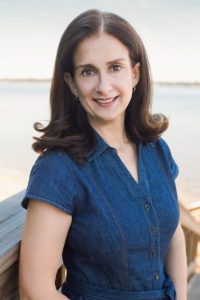
professional headshot“You’d think that with that amount of money, staying in a nursing home should be like staying in a five-star hotel, but no,” says Delia Furtado, professor of economics.

Furtado is interested in how an unexpected variable – immigration — may impact the quality of care that nursing home residents receive. 

“I’ve been working on immigration my entire career — over 20 years now,” says Furtado. Her previous research has explored the assimilation process of immigrants and their impacts on the native population via their work in childcare and housekeeping. 

Furtado’s recently published research in the Journal of Human Resources found that when more people immigrate to a certain geographic area, it leads to better care outcomes for nursing home residents in that area...

Read the full article at UConn Today:

UConn Professor Examines Impacts of Immigration on Nursing Home Care

Professor Levin in UConn Today: Economics Students Gain Research Experience in Historic Risk Lab

Professor Remy Levin is featured in the current issue of UConn Today:

Economics Students Gain Research Experience in Historic Risk Lab

A UConn economics professor has assembled one of the largest known collections of historical insurance policies from the whaling industry. Now, he’s opened that archive to undergraduates for a hands-on research opportunity preparing them for their futures.

In Connecticut, a state once known as a hub of the American whaling industry and home to the “Insurance Capital of the World,” UConn economics majors are learning how these two industries intersected in the 19th century through a unique undergraduate research experience.

Remy Levin, assistant professor of economics, leads a meeting of his Historic Risk Lab with undergraduate research students in Herbst Hall on Oct. 29, 2025.
Remy Levin, assistant professor of economics, leads a meeting of his Historic Risk Lab with undergraduate research students in Herbst Hall on Oct. 29, 2025. (Bri Diaz/UConn Photo)

Remy Levin, assistant professor of economics, leads the Historic Risk Lab, which studies risk-taking and insurance in the whaling industry. A behavioral economist who specializes in decision-making under uncertainty, Levin has spent the past two years assembling one of the largest known collections of historical insurance policies from any industry in the 1800s.

Now, he’s opened that archive to undergraduates for a hands-on research opportunity that connects economic theory with real-world application…

Read the full article at UConn Today:

Economics Students Gain Research Experience in Historic Risk Lab

Economics Major Nidhi Nair is UConn’s First Schwarzman Scholar

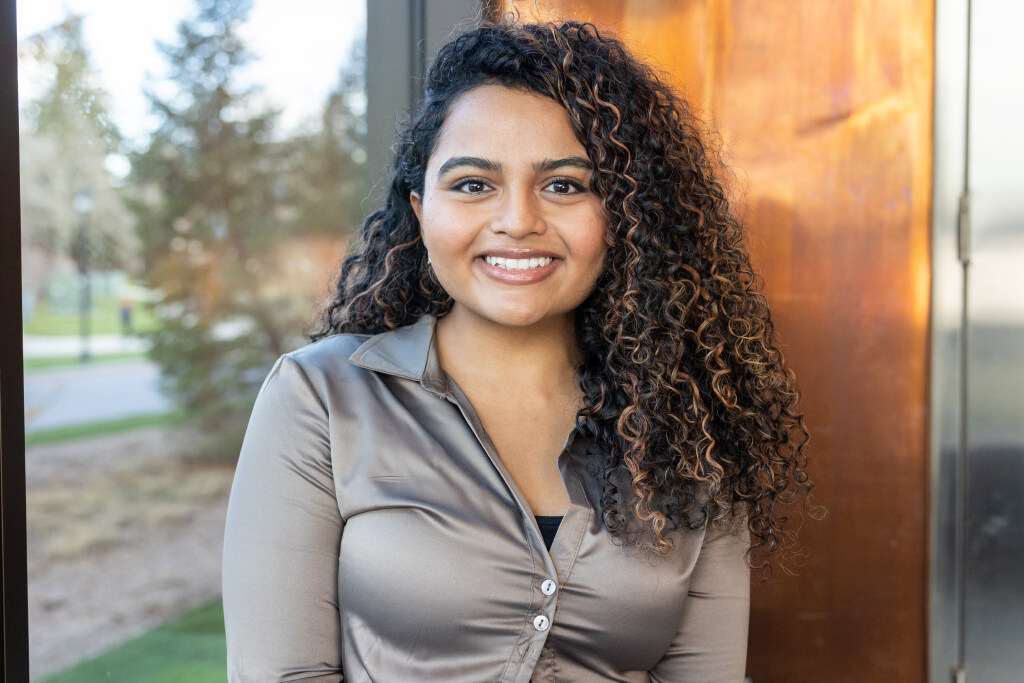
Nidhi Jayakumar Nair in Oak Hall
Nidhi Nair in Oak Hall (Sydney Herdle/UConn Photo)

Economics undergraduate student Nidhi Nair has been featured in UConn Today as the university's first-ever recipient of the prestigious Schwarzman Scholar award.

Nair is an honors student double-majoring in economics and mathematics-statistics and was selected from more than 3,000 applicants to join a cohort of 150 other Schwarzman scholars from around the world in Beijing to complete a one-year master's degree. Recipients of this award are selected on the basis of leadership abilities and potential to bridge political and cultural differences.

Nidhi Nair founded last year's Invisible Hand Economics seminar series and is the president of the UConn Economics Society, as well as being involved in the Women and Minorities in Economics organization here at UConn. Nair has worked on multiple economics research projects here at UConn, and has completed several research and advocacy focused internships at different organizations.

Nair noted the support of her Honors advisor, Economics Professor Richard Langlois in her interview for UConn Today: "Dr. Langlois has also been a source of support and has provided invaluable advice on carving out a strong career in economics that advances my interests in socioeconomic mobility and microeconomic analysis."

Read the full article online: Nidhi Nair '23 Named UConn's First Schwarzman Scholar