Faculty activities

UConn at ASHEcon

Matthew Brown at ASHEcon26Members of the Department of Economics recently presented their research at the 2026 Conference of the American Society of Health Economists (ASHEcon), held in Minneapolis, MN.
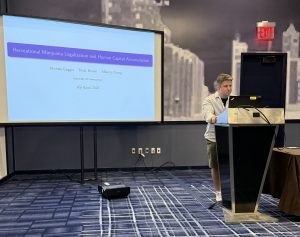
PhD candidate Matt Brown presented “Recreational Marijuana Legalization and Human Capital Accumulation” (coauthored with Professor Baggio and Alberto Chong, Georgia State University). The paper examines how recreational marijuana legalization has affected educational outcomes in the United States. The paper shows that legalization reduced the share of young adults obtaining a GED-or-higher educational attainment and lowered middle school test scores. The study also finds evidence that these laws reduced parental investments in children, as measured by parental time with children, home environment, and cases of child maltreatment.

Professor Ritter presented two papers. The first, “Does Early-Life Medicaid Protect Against Pandemic Mortality? Evidence from COVID-19” (coauthored with Michael DiNardi, a 2018 graduate of UConn’s Economics PhD program and current faculty member at the University of Rhode Island), examines whether childhood Medicaid eligibility improved resilience to later-life mortality shocks. Using mortality data from 2010–2022 and variation from the staggered rollout of Medicaid across states, the paper shows that each additional year of Medicaid eligibility at ages 0–5 reduced adult mortality substantially, with similar effects before and during COVID-19, no significant effects for eligibility at older ages, and a narrowing of racial mortality disparities.

The second paper, “Twice Unlucky: The Interaction of Early-Life Cholera and Adult COVID-19 on Mortality” (with Ricardo Sanchez, Barcelona School of Economics), investigates whether prenatal exposure to Peru’s 1991 cholera epidemic increased vulnerability to COVID-19 mortality decades later. Combining cholera, mortality, and survey data in a quasi-experimental framework, the authors find that greater first-trimester cholera exposure increased COVID-19 mortality among working-age women.

Trumbull High School Students Visit Stamford

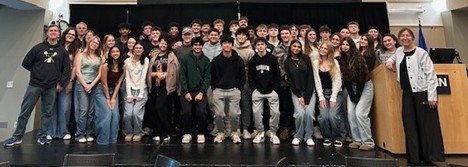
Students enrolled in the Early College Experience (ECE) Economics courses at Trumbull High School visited the Stamford campus on Thursday, March 26, 2026. Forty-five students and three ECE Economics instructors arrived in the early morning hours to take part in the extensive “Day at UConn Stamford” event. Many of those students are accepted to the University of Connecticut and plan to enroll in the Fall.

Trumbull High School students and their ECE Economics teachers at Stamford, March 26, 2026

Stamford Campus Dean, Dr. Jennifer E. Orlikoff, welcomed the group and set them up for an activity-packed day, which included the campus tour, career panel discussion, and attendance of an Economics class.

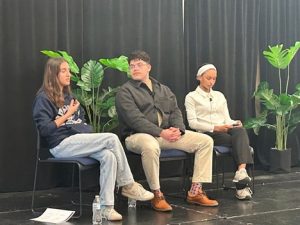
Career panelists, from left to right, Liz Maia (’26), Kothan Nieves-Orama (’27), and Alexys Willaims (’27) answering questions from the audience.

Career panel was moderated by Tara Malone, Director of the Center for Career Development at Stamford. Three Economics majors shared their experience of obtaining internships and jobs with the help of Career Fairs and Career Center events and services. The students, Liz Maia (’26), Kothan Nieves-Orama (’27), and Alexys Williams (’27), talked about the applicability of the Economics major to the broad job market. They answered high school students’ questions about the strategies to be employed at the undergraduate level to secure a job upon graduation. “It is not too early to engage in your career exploration and utilize many resources available on campus to aid you in this endeavor” was the overall message.

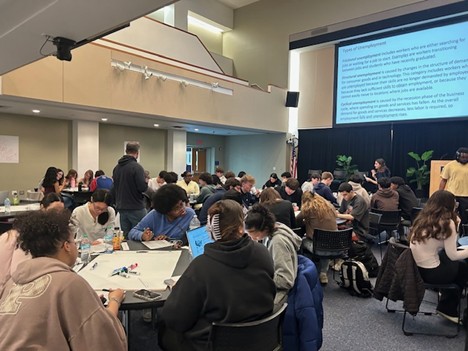
Students attended Dr. Knoblauch’s “Industrial Organization” class and Dr. Smirnova’s “Principles of Macroeconomics” class. Both classes were engaging and interactive. Trumbull students were able to join forces with UConn students on various tasks and learn not only the economics material, but also teamwork and communication skills. These competencies are at the heart of Economics students’ preparation for successful careers. Trumbull school Economics instructors, Mr. Brian Sprinsteen, Mr. Martin McGrath, and Mr. Gregg Basbagill, commented that UConn students were leading the collaborative work during the exercises and were enthusiastically mentoring high schoolers.

Events like this support the outreach mission of the University and promote cooperative spirit between UConn and the local community.

Trumbull High School students working collaboratively with Dr. Smirnova’s students during ECON 1202 Principles of Macroeconomics class on March 26, 2026.
Trumbull High School students working collaboratively with Dr. Smirnova’s students during ECON 1202 Principles of Macroeconomics class on March 26, 2026


New York Fed Official and UConn Aluma Visits Stamford

Ms. Heather Daly, Head of Economic Education at the Federal Reserve Bank of New York, and UConn alumna, visited the Stamford campus on Tuesday, February 17, 2026, to meet Economics students.

Heather’s career includes 30 years of experience in for-profit, nonprofit, and public service organizations. Prior to joining the New York Fed in 2015, Heather was the Senior Director of Executive MBA Admissions at New York University Stern School of Business. Before transitioning into education, she led Network Solutions Group Strategy & Planning at Lucent Technologies (now Nokia Bell Labs). She has also taught micro- and macroeconomics as an adjunct professor for the Bard Prison Initiative, working with students at NYS Eastern Correctional Facility.

Heather Daly, Head of Economic Education, Community Development & Education, Communications and Outreach Group, Federal Reserve Bank of New York
Heather Daly, Head of Economic Education, Community Development & Education,
Communications and Outreach Group, Federal Reserve Bank of New York

Heather earned a Bachelor of Arts and Master of Arts in Political Science from the University of Connecticut, as well as a Master of Business Administration degree from New York University.

At Stamford on February 17, 2026, Ms. Daly presented a talk “Introduction to the Federal Reserve System”, where she took an in-depth look into the history of U.S. Central Banks and the Federal Reserve System. The discussion with students focused on the structure and functions of the Federal Reserve System, and current intricacies of Federal Reserve Board and Federal Open Market Committee (FOMC).

The second focus of Ms. Daly’s presentation was on students’ career preparation. Heather outlined skills and competencies that are needed at the Fed and explained the timeline for opportunities for internships and programs open for various levels of academic preparation.

This unique event, where several Economics classes came together, was conceived and organized by the Economics Research and Policy Council (a.k.a. The Economics Club) in Stamford with support from the Economics Department, its faculty Dr. Couch, and faculty Club Adviser, Dr. Smirnova.

We are grateful to Ms. Daly for coming to campus, sharing her knowledge and expertise, her career “learning journey”, and UConn alumna’s wisdom with Economics students at Stamford.

ECE Economics Workshop 2025

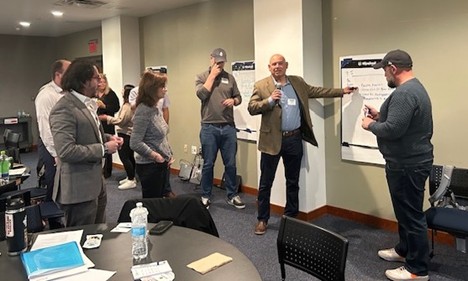
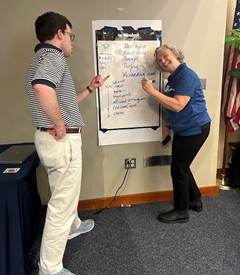
Ralph Russo, ECE Economics instructor at Guilford High School, explains the Vertical Wall activity at the ECE workshop on October 22, 2025, at the Stamford campus

The Early College Experience (ECE) Economics program is one of the largest at UConn. This academic year, we have 36 schools participating, with 50 teachers running 72 sections of introductory Economics courses. Through the ECE, we offer ECON 1000- Essentials of Economics, ECON 1202 – Principles of Microeconomics, and ECON 1202 – Principles of Macroeconomics.

Instructors are certified to teach those courses through a rigorous process of professional development events. The 2025 annual professional development workshop was held on October 22, 2025, at the Stamford campus. We had 31 teachers in attendance.

The speakers included national-level economic educators from Federal Reserve Banks of New York and St. Louis, Marginal Revolution University (MRU), a non-profit provider of economic education materials, and MoneyLing, financial literacy non-profit provider.

The agenda was packed with presentations of innovative pedagogies in the engaging environment:

  • At the Local Level: Classroom Activities for Microeconomics
  • The Big Picture: Basics for Teaching Macroeconomics
  • Global Trade: Who Wins, Who Loses, and Why It Matters
  • The One Where No One Has a Job: Teaching Unemployment and Labor Force Participation Rates
  • Teaching and Learning Economics with FRED Data in the High School Classroom
  • Moneyling – Financial Literacy Program for Schools

Participants explored various techniques that would get their students interested in the economic way of thinking, economic analysis, and contemporary economic issues. Instructors came away with the materials that could be immediately used in their classrooms.

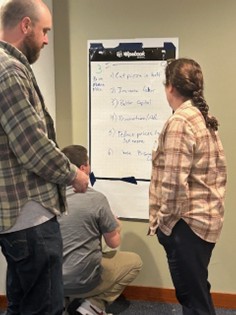
Teachers working on the Vertical Wall assignment

A new feature this year was the sharing of “working well in the classroom” technique by the Guilford High School teacher, Ralph Russo, who demonstrated the “Vertical Wall” activity from the “Building Thinking Classrooms” methodology. The photos show how enthusiastic workshop participants were to engage in this activity. Learning from their colleague and trying out how it feels to be a student in this classroom were the highlights of this demonstration.

Overall, the workshop participants shared their satisfaction with the content of the training. The new location in Stamford was advantageous to the instructors located in Fairfield County.

The Economics Department would like to thank the Stamford Events team for helping with the logistics of this workshop.

Teachers working on the Vertical Wall assignment

Professor Kai Zhao Elected to CES Board of Directors

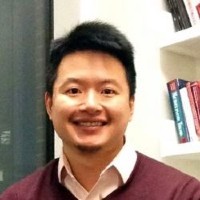
professional headshotProfessor Kai Zhao has been elected to the Board of Directors of the Chinese Economists Society.
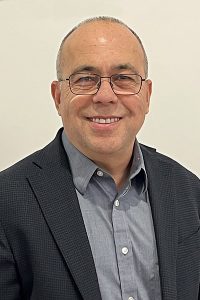
Founded in 1985, the Chinese Economists Society (CES) is a U.S.-registered non-profit academic organization. It aims to promote scholarly exchange among economists and to advance and disseminate research in economics and management sciences, with a focus on China. In his new role, Professor Zhao will contribute to CES’s mission of fostering dialogue on key economic issues and supporting the development of young scholars.

Professor Coşgel in UConn Today: Reimagining Writing Courses in the Age of AI

Portrait of Professor Metin Cosgel

Professor Metin Coşgel is featured in the most recent UConn Today:

Economist Reimagines Writing Courses in the Age of AI

Professor Metin Coşgel is piloting a new AI-integrated writing curriculum in economics, one of UConn’s largest majors, with the potential to shape how writing is taught across disciplines.

As artificial intelligence (AI) reshapes classrooms and careers alike, UConn professor of economics Metin Coşgel is asking a deceptively simple question: Can generative AI help students become better writers?

The answer, Coşgel says, lies not just in what we ask students to produce, but in how we guide them through the writing process itself.

“AI can help with writing, but students need to be able to own their work and defend it along the way, not just generate a final paper at the end because the system allows it,” he says.

This fall, Coşgel will launch a redesigned version of ECON 2500W, a core writing-intensive course for UConn economics majors. Supported by a Teaching Enhancement Grant from the College of Liberal Arts and Sciences (CLAS), the new curriculum integrates AI tools with traditional instruction to help students improve their writing, understand their learning process, and graduate with the skills needed for today’s workforce.

Read the full article at UConn Today:

Economist Reimagines Writing Courses in the Age of AI

Public Economics Students Propose Policy Solutions for Connecticut Waste Management Problem

Public Economics students
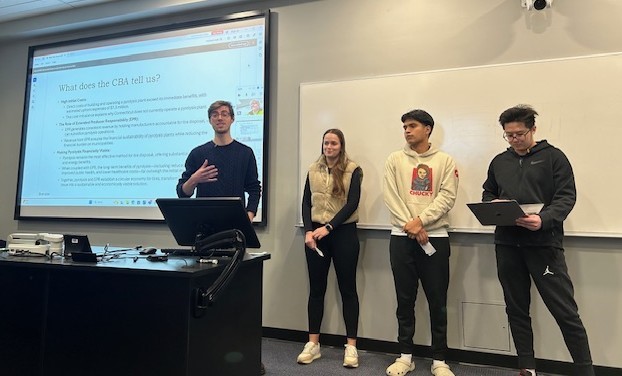
Public Economics students, (from left to right), Brendan Tuite, Abigail McDonough, Isaias Juarez, and Yukun Zhang, present their findings in class on November 19, 2024, Stamford campus

During the Fall 2024, the students in the ECON 3431- “Public Economics” course at the Stamford campus worked with the industry professional to research, analyze, and propose policy solutions to the imminent State of Connecticut problem of Solid Waste Management.

The applied nature of the course allowed students to experience every aspect of public policy development from problem identification, ideation, research of the literature, data gathering, analysis, and policy recommendation formulation.

In addition to Professor Smirnova, who is the instructor of this course, the students worked under the mentorship of Mr. Brian Bartram (CLAS’ 94), who has been the manager of the Salisbury/Sharon (CT) Transfer Station in Connecticut since 2007. At that time Salisbury & Sharon were seeking design ideas to be used in the construction of a new transfer station. Since then, Brian has been active in the Northeast Resource Recovery Association, CT Department of Energy & Environmental Protection’s Solid Waste Advisory Committee, and CT Product Stewardship Council. In 2012 he was appointed by Gov. Malloy to be a member of the Modernizing Recycling Working Group. Brian completed the UConn Master Composter Program in 2015.

Students were assigned to groups to imitate the economic think-tank work environment. Each group selected their topic through the process of ideation based on Brian’s presentation about the acute waste management problem in Connecticut. The following research questions were formulated and answered during the semester:

  1. Cost Benefit Analysis of Installing a Methane Capture System at the Manchester, Connecticut Landfill.
  2. Government Policies Promoting Recycling and Landfill Use Reduction.
  3. Where Did Your Old TV Go?
  4. What is the Most Cost-Effective Waste Conversion Technology for Connecticut Municipalities?
  5. How does Connecticut Dispose of Waste Tires?
Public Economics students
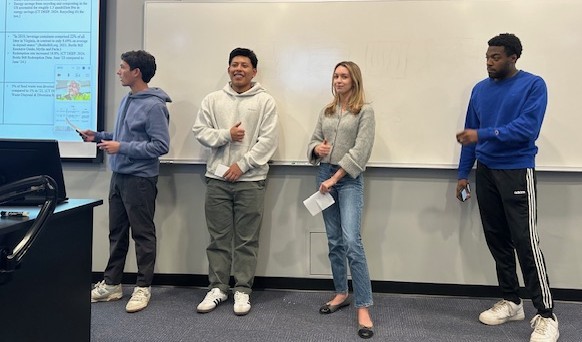
Public Economics students, (from left to right), Sam Jenkins, Jordi Silva, Hannah Geary, and Kyle Nelson, present their findings in class on November 19, 2024, Stamford campus

At the completion of the course, student teams presented their findings to the class with Mr. Bartram visiting the class virtually, asking questions, and commenting on issues. Brian reflected that he “really enjoyed how different student teams were looking at the issue from different angles. Solid waste is a national, regional, state, and local issue. All different views and situations need to be considered and assessed.”

Through this exercise, students learned to collaborate with and present and defend their findings to the industry expert. Collaborative experiences such as this, between UConn students and the State of Connecticut professionals, are invaluable in preparing our students for careers in industries and the public sector. By integrating the workplace analytical approaches into the curriculum of applied courses, we are teaching students career competencies that are demanded of them upon graduation.

Professor Langlois Delivers the Eli Heckscher Lecture in Stockholm

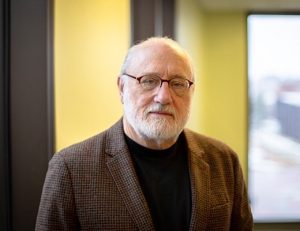
Photo of Richard Langlois, Economics Department Head

Professor Langlois delivered the Eli Heckscher Memorial Lecture at the Stockholm School of Economics on September 26, 2024, talking on the theme of the American corporation in the twentieth century.

The Heckscher lecture has been given annually since 2003 by a list of distinguished economists, including two Nobel Laureates. It is named in honor of Eli Heckscher (1879-1952), known to most economists for the Heckscher-Ohlin theorem in international trade, who was the founder of economic history in Sweden.

UConn Hosts Experimental Economics Workshop

On July 1 and 2, the Department of Economics hosted the annual New England Experimentalist Workshop.

The Workshop brought together experimental and behavioral economists from twelve universities to present research on topics as diverse as gender pay disparities, self-censorship of political views in the classroom, and effective environmental policy.

The two-day workshop was organized by faculty members Remy Levin and Mike Shor and graduate student Anastassiya Karaban.