Professor Susan Randolph has received the Grawemeyer Award for Improving World Order. Professor Randolph’s work is being furthered through the Human Rights Measurement Initiative, HRMI (pronounced Her Me) – https://humanrightsmeasurement.org – targeted to human rights advocacy groups and civil society.
As described in an article for UConn Today by Kathryn Libal, Director of UConn’s Human Rights Institute:
https://today.uconn.edu/school-stories/uconn-professor-recognized-improving-world-order
Longtime University of Connecticut professor Susan Randolph received the prestigious Grawemeyer Award for Improving World Order, which honors those who take on issues of global concern and present ideas that inspire others and can lead to a more just and peaceful world.
Randolph, the Gladstein Committee Member and Professor Emeritus in Economics, was jointly recognized for the 2019 award from the University of Louisville along with collaborators and book co-authors Sakiko Fukuda-Parr, of The New School in New York City, and Terra Lawson-Remer, Stanford University.
The three were named co-winners for the ideas set forth in their book, Fulfilling Social and Economic Rights. The work, published in 2015 by Oxford University Press, offers a method for gauging how well nations are providing basic human rights of food, health, education, housing, work and social well-being to their citizens and suggests how they can advance such rights even further.
The trio used the United Nations’ 1948 Universal Declaration of Human Rights and 1966 International Covenant on Economic, Cultural and Social Rights as a basis for their work, creating a new tool, the Social and Economic Rights Fulfillment (SERF) Index, to measure nations’ progress toward human rights goals. Their book also sheds light on policies that advance human rights and explains how use of these policies and public pressure can lead to results.
“Scholars working across disciplines have used the SERF to forge new tools for shaping policy and scholarship, driving more inclusive and dynamic approaches to economic development,” said Shareen Hertel, co-director of UConn’s Research Program on Economic and Social Rights.
Although the authors noted there has been steady progress in social and economic rights fulfillment over the past 30 years, they found that disparities still exist in every region of the world. Their measurement tool is aimed at helping governments and other organizations address those disparities.
In 2016, the book won the American Political Science Association’s Human Rights Section Best Book Award.
Previous winners of the Grawemeyer Award for Improving World Order include Mikhail Gorbachev, honored for his 1988 address to the United Nations which led to the effective end of the Cold War and paved the way for the democratization of Eastern Europe and the Baltic republics; Trita Parsi, for his work toward reducing tensions in the Middle East; and Dana Burde, for her work examining the influence foreign-backed funding for education has on war-torn countries and how such aid affects humanitarian and peace-building efforts.
Recipients of the 2019 Grawemeyer Awards are being named this week pending formal approval by university trustees. The annual, $100,000 prizes reward outstanding ideas in music, world order, psychology, education and religion. Winners visit Louisville in April to accept their awards and give free talks on their winning ideas.
https://today.uconn.edu/school-stories/uconn-professor-recognized-improving-world-order
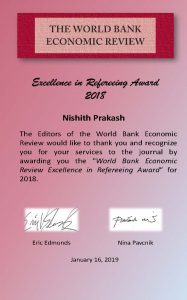 Professor Nishith Prakash has received the “World Bank Economic Review Excellence in Refereeing Award”, recognizing his service to the journal World Bank Economic Review.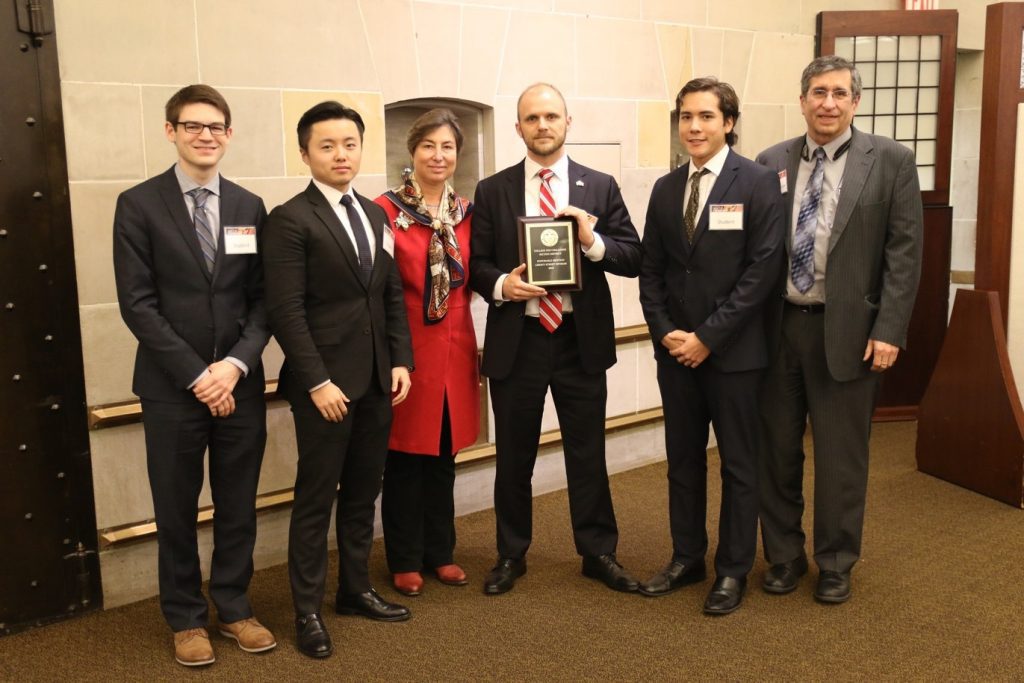
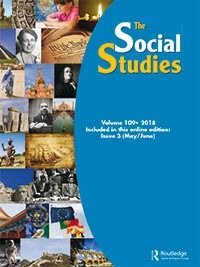 Smirnova’s article
 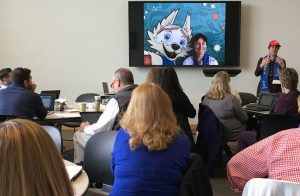 Professor Prakash’s paper was followed by a presentation by Professor Natalia Smirnova (a UConn Economics Ph.D.) entitled “Oligarchs and Ivans: A Changing Russian Economy 1990-2020” in which Professor Smirnova provided both background and predictions for the modern Russian Economy including a look forward.
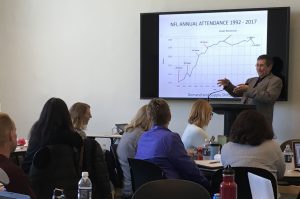 Professor Oskar R. Harmon, who is doing research and teaching about sports economics, presented an exciting session entitled “Sports Economics and Principals of Economics” over lunch. Professor Harmon was followed on the program by Mr. Paul Conant explaining the Kyoto Treaty to the teachers in a session titled “Kyoto and Beyond.”
 Economics Coordinator and Emeritus Professor of Economics Bill Alpert capped off the day with his discussion “Income Distribution: What’s the Matter?”
  At the 2018 Sports and Society Conference Oskar Harmon participated in the panel “Activism in the 21th Century”.