Web cookies (also called HTTP cookies, browser cookies, or simply cookies) are small pieces of data that websites store on your device (computer, phone, etc.) through your web browser. They are used to remember information about you and your interactions with the site.
Purpose of Cookies:
Session Management:
Keeping you logged in
Remembering items in a shopping cart
Saving language or theme preferences
Personalization:
Tailoring content or ads based on your previous activity
Tracking & Analytics:
Monitoring browsing behavior for analytics or marketing purposes
Types of Cookies:
Session Cookies:
Temporary; deleted when you close your browser
Used for things like keeping you logged in during a single session
Persistent Cookies:
Stored on your device until they expire or are manually deleted
Used for remembering login credentials, settings, etc.
First-Party Cookies:
Set by the website you're visiting directly
Third-Party Cookies:
Set by other domains (usually advertisers) embedded in the website
Commonly used for tracking across multiple sites
Authentication cookies are a special type of web cookie used to identify and verify a user after they log in to a website or web application.
What They Do:
Once you log in to a site, the server creates an authentication cookie and sends it to your browser. This cookie:
Proves to the website that you're logged in
Prevents you from having to log in again on every page you visit
Can persist across sessions if you select "Remember me"
What's Inside an Authentication Cookie?
Typically, it contains:
A unique session ID (not your actual password)
Optional metadata (e.g., expiration time, security flags)
Analytics cookies are cookies used to collect data about how visitors interact with a website. Their primary purpose is to help website owners understand and improve user experience by analyzing things like:
How users navigate the site
Which pages are most/least visited
How long users stay on each page
What device, browser, or location the user is from
What They Track:
Some examples of data analytics cookies may collect:
Page views and time spent on pages
Click paths (how users move from page to page)
Bounce rate (users who leave without interacting)
User demographics (location, language, device)
Referring websites (how users arrived at the site)
Here’s how you can disable cookies in common browsers:
1. Google Chrome
Open Chrome and click the three vertical dots in the top-right corner.
Go to Settings > Privacy and security > Cookies and other site data.
Choose your preferred option:
Block all cookies (not recommended, can break most websites).
Block third-party cookies (can block ads and tracking cookies).
2. Mozilla Firefox
Open Firefox and click the three horizontal lines in the top-right corner.
Go to Settings > Privacy & Security.
Under the Enhanced Tracking Protection section, choose Strict to block most cookies or Custom to manually choose which cookies to block.
3. Safari
Open Safari and click Safari in the top-left corner of the screen.
Go to Preferences > Privacy.
Check Block all cookies to stop all cookies, or select options to block third-party cookies.
4. Microsoft Edge
Open Edge and click the three horizontal dots in the top-right corner.
Go to Settings > Privacy, search, and services > Cookies and site permissions.
Select your cookie settings from there, including blocking all cookies or blocking third-party cookies.
5. On Mobile (iOS/Android)
For Safari on iOS: Go to Settings > Safari > Privacy & Security > Block All Cookies.
For Chrome on Android: Open the app, tap the three dots, go to Settings > Privacy and security > Cookies.
Be Aware:
Disabling cookies can make your online experience more difficult. Some websites may not load properly, or you may be logged out frequently. Also, certain features may not work as expected.
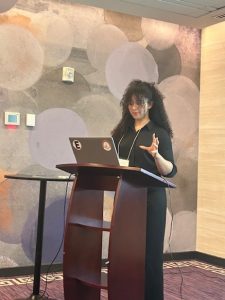
Isabella Thomas (’27) presents at the IPE conference, NYC, February 27, 2026
Two Economics undergraduate students from the Stamford campus, Isabella Thomas (’27) and Angel Bravo (’26), presented their research at the Issues in Political Economy conference in New York City on February 27, 2026. The agenda featured 43 student presentations from 20 academic institutions from all over the United States. As per the academic conference style, Isabella and Angel also were assigned as discussants for the research papers of other students. They gained the full experience of the professional economics conference.
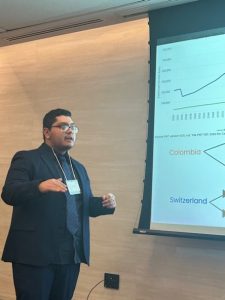
Angel Bravo (’26) presents at the IPE conference, NYC, February 27, 2026
Both students presented the results of the empirical application of the Solow Growth Model comparing economic development of countries of their choice. Isabella Thomas studied Venezuela and Brazil, while Angle Bravo compared Columbia and Switzerland. This research stemmed from the ECON 2012 Q – Intermediate Macroeconomics course taught by Professor Smirnova. The students studied the literature, worked with the Penn World Tables dataset, and applied regression analysis to the time series covering 1950-2019. The results show that countries differ in their economic development paths. The students delve into the reasons for divergence for each country and provided their policy recommendation in each case.
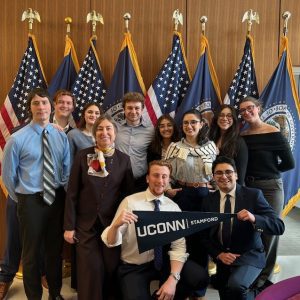
To support Isabella and Angel, the Economics Research and Policy Council (a.k.a. Economics Club) in Stamford, organized the trip to the conference supported by Stamford Student Activities. The group of 12 Stamford Economics students attended the conference and participated in lively academic discussions among the participants.
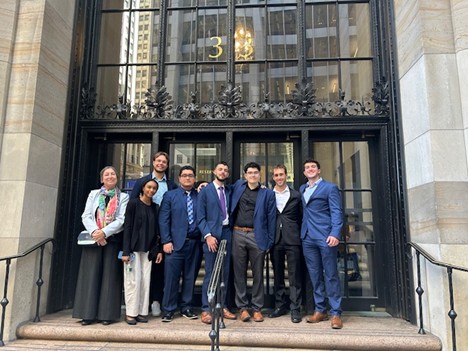
UConn Stamford Fed Challenge Team outside of the New York Fed after the Orientation, September 2025. From left to right: Dr. Smirnova (faculty adviser), Alexys Williams, Dmitrii Tuzov (graduate student adviser), Angel Bravo, Anthony Brunetto, Kothan Nieves-Orama, Jagger Ferrajina, Constantine Lampronikos.
In the Fall 2025, the UConn Stamford team participated again in the national College Fed Challenge competition, where teams analyze economic and financial conditions and formulate a monetary policy recommendation, modeling the Federal Open Market Committee. This year, 139 teams participated in the Challenge, so the competition was fierce. The video of the UConn Stamford team is here.
Here is UConn Stamford’s 2025 College Fed Challenge Team:
Angel Bravo is a B.S. Economics major with minors in Accounting & Mathematics at the University of Connecticut, where he focuses on financial markets, economic research, and quantitative analysis. His coursework in econometrics, financial accounting, and programming has equipped him with a strong analytical foundation that supports his long-term goal of becoming a quantitative analyst in the banking industry.
During his time as a team member of the Fall 2025 College Fed Challenge, Angel contributed research on tariffs and monetary policy implementation. Beyond the classroom, he is also conducting research on global economic development and income inequality among countries, which he will present at an undergraduate research conference in New York. Additionally, he is an active member of the Economics Research & Policy Club and participates in UConn’s Honors Program, where he served as a student facilitator to promote academic curiosity, leadership, and student-led initiatives.
With his combined experience in research and student leadership, Angel also hopes to one day pursue college-level teaching in the further future. He is deeply committed to his academic and professional development and looks forward to advancing his studies through future master’s work and a career in quantitative finance.
Anthony Brunetto is a senior majoring in economics. His interest in the Fed Challenge started when he saw the 2024 team take a picture with the current Federal Reserve Chair, Jerome Powell, posted in the hallway, and from that point, he was determined to join the team. His main contribution to the team was researching inflation and how the Fed’s policy impacted bond and stock markets. Anthony, while studying economics, has an interest in wealth management, which is directly affected by the Fed’s monetary policy, so he took Money and Banking and Practicum to expand his knowledge of how the Federal Reserve operates and how money works. Anthony plans to use his knowledge he gained in the Fed challenge, as well as his undergrad studies, to become a wealth advisor post-grad.
Jagger Ferrajina is a senior Economics major at the University of Connecticut with a strong interest in monetary policy, global markets, and international trade. He works in vessel operations at John F. Dillon & Co., where he has gained hands-on experience in dry bulk shipping, charter parties, and global logistics.
He is actively involved in UConn’s Fed Challenge and serves as Vice President of the Economics Research & Policy Club, helping create opportunities for students to engage with economic policy and current events on the Stamford campus. Through both academic and professional experience, Jagger has developed a strong interest in the intersection of economics, finance, and global trade, and he plans to pursue a career in these fields following graduation.
Constantine Lampronikos is a senior Economics Major at the University of Connecticut with strong interest in Finance and relationship-driven business. He has developed hands-on industry experience through internships in both the tanker and dry-bulk sectors of the shipping industry, where he worked on voyage calculations, freight rate analysis, and operational logistics. He is fascinated by the way business systems interconnect across markets, industries, and economic environments.
Throughout his undergraduate schooling, he has balanced full-time coursework with professional commitments. Recently, he maintained an internship at John F. Dillon & Co as well as his job as a server at Columbus Park Trattoria in Stamford, both while actively participating in the Fed Challenge and being enrolled full-time in school. Constantine prides himself on his work ethic, adaptability, and ability to cooperate with others. He is highly motivated and continually searching to meet people, gain fresh insight, and build new skills. Outside of academics, he enjoys fitness, travel, trying new things, all while spending time with friends and family.
Kothan Nieves-Orama is a Junior Economics student accelerating his academic career through the 4+1 Fast-Track program for a master’s in public policy. His academic pursuits are deeply informed by his professional experience as a Relationship Banker, where he gained firsthand insight into the complexities and impacts of the banking sector.
As the Editor-In-Chief for the Economic Research & Policy Club, Kothan merges his passion for economic theory with his avid interest in History and Philosophy. This role, along with his dedication to synthesizing complex information, has catalyzed his interest in teaching and mentorship. He actively cultivates these skills as a Path Mentor for incoming Freshmen and as an Honors Ube-Facilitator, a key leadership position overseeing Honors First-Year Seminar Courses across regional campuses. This extensive background in leadership positions will help Kothan to seamlessly transition into a career dedicated to educating future generations.
Calebe Velozo is a Brazilian student majoring in economics with a minor in information technology. His interest in the Fed Challenge grew through studying how monetary policy influences the broader economy and financial conditions. Calebe also works at Apple, where he acquired skills to understand the financial aspect of our monetary policy presentation. For the Fed Challenge, Calebe focused on understanding key economic indicators and how they guide policy decisions. He plans to use the knowledge gained from this experience, along with his coursework, to continue developing in the fields of economics, technology, and data driven decision making.
Alexys Williams is a junior honors student at UConn majoring in Economics. She developed an interest in economics through her love of geography and a fascination with how countries and markets are interconnected. She enjoys exploring the world’s complexity and understanding how economic systems influence global outcomes.
She has applied her interests through internships in asset management and private equity, gaining experience in market monitoring and macro-financial analysis. Her coursework in Money and Banking and Quantitative Analysis has provided a strong foundation in both theory and practice. She contributed to the Fed Challenge team by researching labor markets, which deepened her understanding of macroeconomic dynamics. Alexys also serves as Secretary of the Economics Research and Policy Council, a club dedicated to promoting economic literacy and engagement on the UConn Stamford campus. Outside of academics, she enjoys photography, cooking, baking, and aviation. She makes it a goal to constantly learn, embrace new challenges, and grow from every experience.
The Graduate Student Adviser to the team was Dmitrii Tuzov.
Dmitrii Tuzov is a graduate student in the MS in Business Analytics & Project Management program, where he is pursuing advanced studies in data science, machine learning, and AI-driven decision-making. Before joining UConn, Dmitrii worked as a financial and investment analyst and later advanced into roles spanning the full data analytics vertical: business analytics, data science and engineering, where he delivered predictive models, cost-control systems, and data pipelines that informed both operational and strategic decisions.
He served as an advisor for the Stamford Fed Challenge team, supporting students in economic analysis, forecasting, and policy communication. In this role, he advised students on collecting, analyzing, and interpreting macroeconomic data; showed forecasting and econometric techniques; and guided the team’s analytical argumentation and preparation of evidence-based economic presentations. Beyond academics, Dmitrii is actively involved in AI/ML research and business initiatives and is passionate about helping younger students grow both technically and professionally.
The value of participation in the College Fed Challenge competition can not be overestimated. In addition to a deep academic leaning about the conduct of monetary policy in the U.S., students develop many career competencies that will be helpful in their various pursuits after graduation.
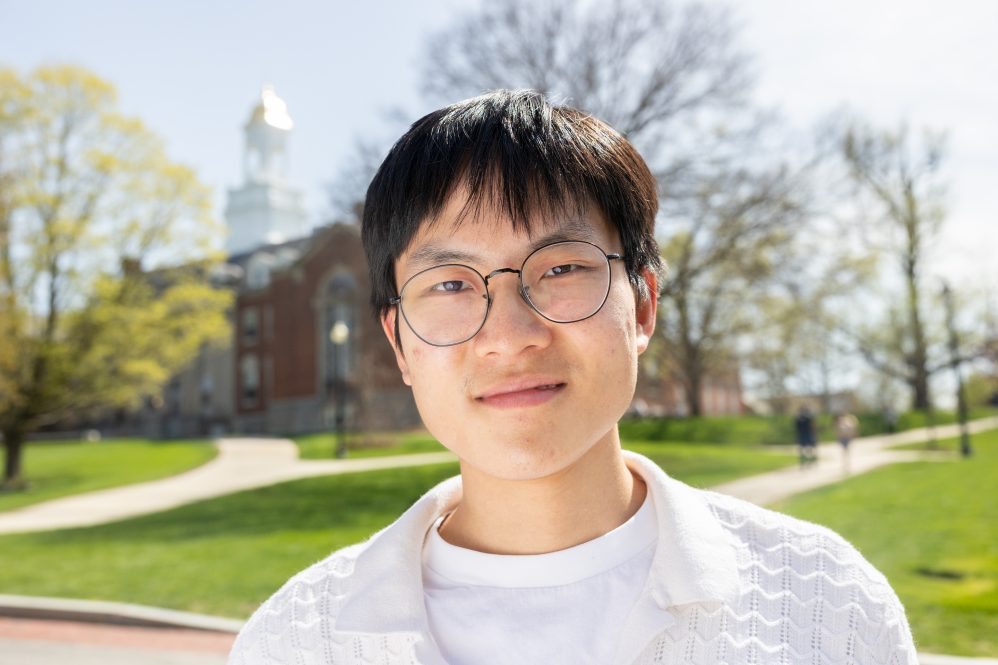
Excellence in liberal arts and sciences, a commitment to intellectual curiosity, and a relentless pursuit of knowledge—these are the hallmarks of the Phi Beta Kappa Society. Today, we celebrateAndy Zhang, an outstanding economics and environmental sciences major whose dedication and brilliance have earned him a place among the nation’s most distinguished scholars. With a legacy that includes presidents, Supreme Court justices, and Nobel laureates, it represents the highest honor in academic achievement. Congratulations on this well-deserved honor! Read more:Junior Named Key Into Public Service Scholar – UConn Today
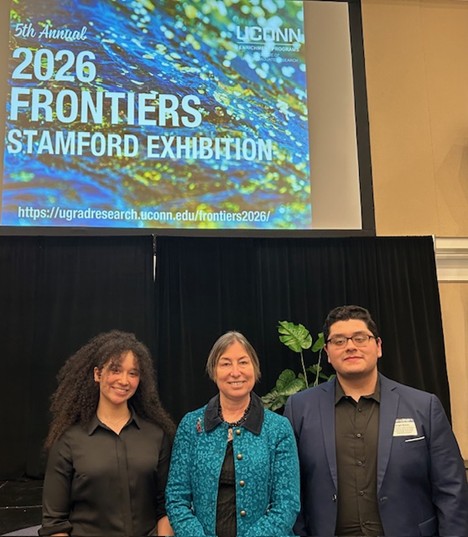
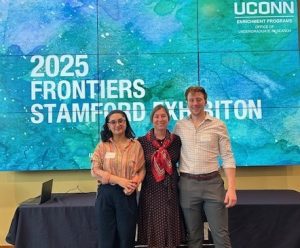
Two Economics students, Madina Mamedli and Cole Sembrot presented their research at the Frontiers in Undergraduate Research Exhibition in Stamford on April 22, 2025. Their academic adviser is Professor Smirnova.
Madina Mamedli presenting her research
Madina’s paper was entitled “From Chalk to Checkbooks: The Real Price of Educational Inequality”. Madina compared the investment in and the outcomes of public and private secondary education institutions in the U.S. Her literature review and regression analysis revealed inadequate funding for public schools, which leads to lower SAT scores, lower college counselor / student ratio, and other disadvantages for students attending public schools. Madina concluded that educational inequality transforms early life privileged into long-term economic advantage. Disparities in school resources, academic support, and access to college counseling directly shape earning potential.
Cole Sembrot presenting his research
Cole Sembrot discerned fiscal and monetary policies’ impacts on the economy during the pandemic. His paper was entitled “Was COVID Inflation Worse Because of Combined Fiscal and Monetary Expansion?” Cole has built the regression model that examines how much post-COVID inflation is due to the actions of the Federal Reserve: near zero interest rates, QE, balance sheet expansion, and money supply growth, while controlling for supply-side shock. Cole concluded that the post-pandemic inflationary episode is due to a complex interplay between policy and external economic shocks.
Madina Mamedli (’25), Dr. Smirnova, Cole Sembrot (’25)
The event was attended by more than 50 people: students, faculty, and staff. There were guests from the Office of Undergraduate Research and UConn Enrichment Programs as well as Stamford campus administration. The atmosphere of the event was academic in nature, but friendly and supportive. 20 students from various fields of study presented their research results. Experiences like this help students gain confidence and prepare for careers upon graduation.
UConn Storrs 2024 Team: from left to right: back row: Professor Derek Johnson (faculty adviser), Spencer Thompson, Viren Chainani, Lilla Korniss, Claire Dobbins, Katrina Melnik, Professor Owen Svalestad (faculty adviser). Front row: Nameeda Elmi, William Infante, Evelyn Zhou and Rai Kumar
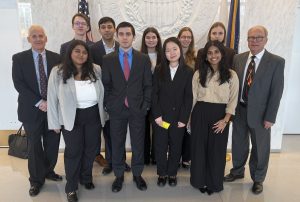
The Economics Department students participate in the College Fed Challenge national competition every year. The Storrs team competes in the Boston district of the Federal Reserve System, and the Stamford team competes in New York. In 2024, the Storrs team was a National Finalist, which is an exceptional achievement. In February 2025, both teams travelled to the Board of Governors of the Federal Reserve System in Washington, DC, for an Open House for all participants.
UConn Stamford 2024 Team: from left to right: back row: Matthew Dalzell, Thomas Surette, Angelina Solodka, Professor Smirnova (faculty adviser), Paul Juszczyk, Liz Maia, Madina Mamedli, Brenda Leon, Mallory Albrecht, front row: Cole Sembrot and Micthell Velasco.
In addition to summarizing results from the 2024 competition, the agenda of the Open House focused on showcasing various segments of the Fed’s functions and sharing career opportunities available at the Board for graduates with bachelor’s degrees. Participants heard from Brian Bonis, Assistant Secretary of the FOMC, Matt Eichner, Director of the Division of Reserve Bank Operations and Payment Systems, and a panel of former Fed Challenge participants, who are now employed as Research Assistants (RAs) at the Board.
The students of both teams were excited to participate in the Open House and are appreciative of the Economics Department as well as other entities that provided funding for this trip. The sponsors are the Business School, CLAS Dean’s Office, UConn Center for Career Readiness and Life Skills, and Stamford campus administration. Thank you!
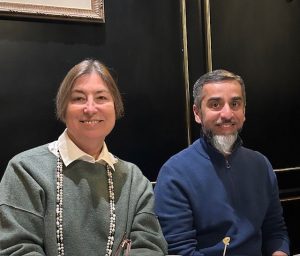
During the trip to the Open House at the Federal Reserve Board, UConn-Stamford 2024 Team of the College Fed Challenge competition had an opportunity to meet with UConn alum, Misbah Seyal. Mr. Seyal is a real estate professional with a substantive career including various positions at Moody’s, Wells Fargo, Bank of America, and other financial services firms.
Natalia Smirnova, faculty, (left) and Misbah Seyal, UConn alum (BA’97, MBA’04), at dinner with students on February 6, 2025, in Washington, DC.
During the meeting with students, Misbah talked about career opportunities after graduation from UConn. He emphasized the importance of developing skills that could be transferred to the workplace and of being adaptable to labor market conditions as they change.
Students were interested in learning about the real estate sector as well as about the financial sector. They were curious about navigating the competitive market environment and about balancing career expectations and family. Misbah shared his wisdom and encouraged students to pursue their passions and dreams.
The students, as well as Dr. Smirnova, faculty adviser to the College Fed Challenge team, are grateful to Mr. Seyal for his time with us. We are also appreciative of Ms. Siobhan Lidington, Director of Development, School of Business, University of Connecticut Foundation, for her efforts to make this meeting possible.
Congratulations to the UConn Storrs Fed Challenge team!
Over the past few days, the undergraduate students on the Fed Challenge team competed in the Boston Federal Reserve (Boston Regional) Fed Challenge competition, and they excelled – first advancing to the Boston Regional Finals, and then advancing to the National Finals.
As a result, in November the team members will be presenting their economic forecasts and monetary policy recommendations to the Federal Reserve in Washington, DC. This is an exceptional achievement.
A brief recap of the Boston event… On Friday, October 18th, the team competed with 23 other universities and colleges in the New England Boston Federal Reserve district. For the first round, the 24 teams (universities and colleges) were divided into six groups of four, with the winner of each group moving on to the Boston Regional Finals.
The UConn team won in its group, and earned its spot in the Regional Finals, joining the other five other Regional Finalists (Yale, Harvard, Wellesley, Babson and Dartmouth) to compete in a final round on Sunday. The final round would decide which three of the six Regional Finalists would move on to the National Finals.
UConn competed against the schools in the Regional Finals, presenting analyses of current macroeconomic conditions and monetary policy recommendations and fielding questions from Boston Federal Reserve economists. The UConn team was outstanding, and by the end of the day had made it to the National Finals along with two other teams.
The three New England Universities to move on are Yale, Harvard and UConn.
Congratulations to our student team members for all of their hard work and accomplishments!
The students are:
Viren Chainani (presenter) Spencer Thompson (presenter) Claire Dobbins (presenter) Rai Kumar (presenter) Katrina Melnik (presenter) Nameeda Elmi William Infante Lilla Korniss Evelyn Zhou John Mclean
The faculty advisors are Derek Johnson and Owen Svalestad.
As part of her University Scholar project, Karen Lau ’25, who is triple majoring in economics, history, and Asian American studies (individualized), spent the summer going through archives at NYU’s Tamiment Library and interviewing women involved in the 1982 International Ladies’ Garment Workers’ Union (ILGWU) strike in Manhattan. For the economics part of her project, with the guidance of Professor Delia Furtado, she will use Current Population Survey (CPS) data and state-of-the-art empirical techniques to estimate the causal impacts of the strike on labor market outcomes of New York City garment workers.
When asked if she had advice for other economics majors considering applying for the University Scholar program, she responded,
“While applying for University Scholar, I had no experience with STATA or any knowledge of which data sources to use, but I had ideas, and I knew which faculty members whose research I found interesting that I could ask for support. Meet with faculty members in different departments to share your ideas. Their feedback and experience will help you distill your ideas, which may be too broad or too ambitious, into a specific, understudied topic to which your research could contribute original findings. Professor Furtado motivated me to take Econometrics II, learn unfamiliar techniques, and develop a mixed-methods approach, allowing my data analysis and regressions to corroborate my qualitative research. Don’t be intimidated by the “Q” in Econometrics I and II! Learning to use STATA can be challenging at first, but taking these courses will help you develop quantitative skills that can serve you beyond college and help you contribute to the literature on a topic you are passionate about. In Econometrics II, I learned about difference-in-differences regression, a method I am using to analyze how a labor shock impacted workers’ wages. The more comfortable I felt using STATA, the more confident I felt carrying out a thesis project with techniques drawn from economics. The University Scholar program is looking for interdisciplinary-minded students who are not necessarily the most experienced researchers, but who are most willing to challenge themselves to build new skills and bring multiple fields into conversation.”
(left to right) Mitchell Velasco (’25), Dr. Smirnova, Matthew Dalzell (’25) at the Frontiers of Undergraduate Research Exhibition, Stamford campus, April 16, 2024
The Welcome Center area at the Stamford campus was crowded on April 16th as the Frontiers of Undergraduate Research 2024 exhibition was about to start. Thirteen undergraduate students from the Stamford campus presented their research on various topics within diverse fields of study.
Among the presenters, there were two students of Professor Smirnova, Matthew Dalzell and Mitchell Velasco. Both started their research in the ECON 3431W – Public Economics course. However, their interest in the topic grew and they continued working on their papers.
Matthew Dalzell’s (‘25) paper entitled “The Impact of Privately Owned Buses on Carbon Dioxide Emissions in Connecticut” written in Spring 2023 was presented at the New York State Economics Association (NYSEA) conference 2023 in October. Matthew’s trip to the conference was sponsored by the Office of Undergraduate Research, for which Matthew is grateful. Matthew acknowledged in his speech the benefits of attending a conference outside UConn. He said that such exposure allowed him to see what students at other universities are doing in terms of research, “rub elbows” with professional economists and distinguished faculty, and gain confidence for his studies and future career aspirations.
Mitchell Velasco’s (‘25) paper entitled “Decarbonization of the US Power Grid and Cost Competitiveness of Renewable Energy Technology” was written in Fall 2023. The Frontiers’ presentation was the first outside-of-the-classroom presentation for Mitchell. Dr. Smirnova encourages Mitchell to continue improving his paper and to submit it to the undergraduate panel at the Eastern Economic Association, the annual conference of which is scheduled for February 2025 in New York City.
The Frontiers event showcased the dedication of the Stamford faculty to undergraduate students’ success and to students’ preparation for careers after graduation.
At the Open House, students had the opportunity to network with their peers, hear from Chairman Jerome Powell and staff from the Monetary Affairs division – all in celebration of the 20th anniversary of the Board hosting the College Fed Challenge finals.
This trip has an educational value that cannot be replicated through any other venue. Students’ learning outcomes included: 1) experiential learning at the Federal Reserve Board of Governors; 2) deeper knowledge acquisition of the structure of the Federal Reserve Board, conduct of monetary policy, and internship and employment opportunities at the Board; 3) networking with the Federal Reserve officials and students from other universities.
The highlight of the trip was the meeting with Chairman Powell and taking a picture with him.
First row: (from left to right) Kiet Tran, Professor Smirnova, Chairman Powell, Adrien Vincent, Kevin Jankowski; second row: (from left to right) Noah Park, Felix Brito-Velazquez, Parth Trivedi
The trip was organized by Professor Smirnova, the faculty adviser to the team, and made possible by collaborative efforts of the Economics Department, CLAS Associate Deans Office, the Business School, and the Stamford campus. The students are grateful for the opportunity to expand their economics knowledge and career competencies such as teamwork, professionalism, and career and self-development.