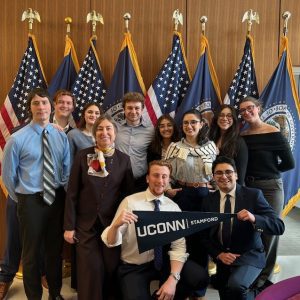
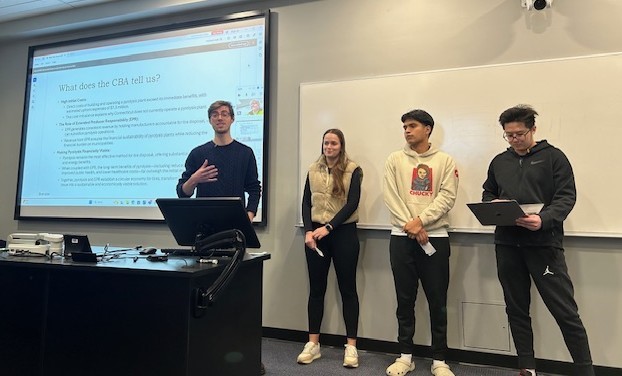
Two Economics students, Madina Mamedli and Cole Sembrot presented their research at the Frontiers in Undergraduate Research Exhibition in Stamford on April 22, 2025. Their academic adviser is Professor Smirnova.

Madina’s paper was entitled “From Chalk to Checkbooks: The Real Price of Educational Inequality”. Madina compared the investment in and the outcomes of public and private secondary education institutions in the U.S. Her literature review and regression analysis revealed inadequate funding for public schools, which leads to lower SAT scores, lower college counselor / student ratio, and other disadvantages for students attending public schools. Madina concluded that educational inequality transforms early life privileged into long-term economic advantage. Disparities in school resources, academic support, and access to college counseling directly shape earning potential.
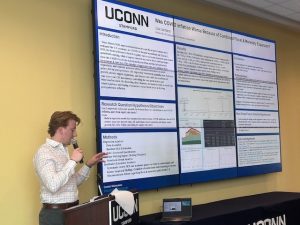
Cole Sembrot discerned fiscal and monetary policies’ impacts on the economy during the pandemic. His paper was entitled “Was COVID Inflation Worse Because of Combined Fiscal and Monetary Expansion?” Cole has built the regression model that examines how much post-COVID inflation is due to the actions of the Federal Reserve: near zero interest rates, QE, balance sheet expansion, and money supply growth, while controlling for supply-side shock. Cole concluded that the post-pandemic inflationary episode is due to a complex interplay between policy and external economic shocks.

The event was attended by more than 50 people: students, faculty, and staff. There were guests from the Office of Undergraduate Research and UConn Enrichment Programs as well as Stamford campus administration. The atmosphere of the event was academic in nature, but friendly and supportive. 20 students from various fields of study presented their research results. Experiences like this help students gain confidence and prepare for careers upon graduation.
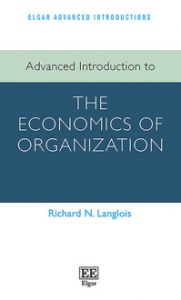 Professor Langlois’s book Advanced Introduction to the Economics of Organization has been published in the Elgar Advanced Introduction series: